Post
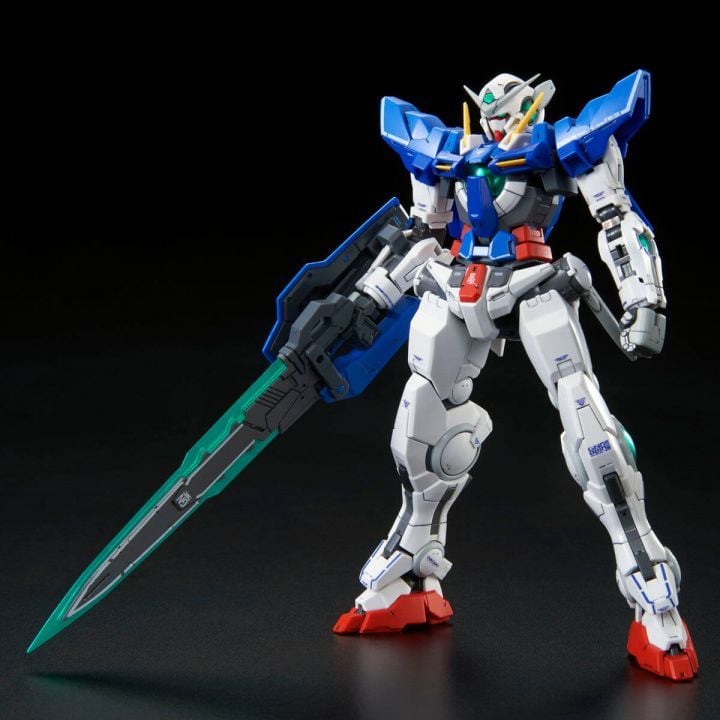
Exia Repair RG 2
May
1. The Lore: The Ultimate Testament to Survival
To truly appreciate the RG Exia Repair, one must look at what this design represents. At the end of Season 1, pilot Setsuna F. Seiei and the Exia survived a brutal, pyrrhic battle against Alejandro Corner’s Alvatore and Graham Aker’s GN Flag. Left stranded on Earth with limited resources and no support from Celestial Being, Setsuna spent four years patch-repairing his damaged Mobile Suit using whatever scrap parts he could find. Exia Repair RG
The resulting machine is the antithesis of traditional, pristine Gundams. It is a mechanical representation of sheer willpower, holding together a volatile GN Drive with makeshift armor plating and a heavy cloth cloak to conceal its missing arm.
2. Visual Asymmetry and Assembling the Scars
The defining characteristic of the RG Exia Repair is its absolute, unapologetic asymmetry. Building this kit is a fascinating experience because it completely subverts the standard Gunpla rhythm of “build one leg, then build an identical second leg.”
The Face of a Survivor
The head sculpt is a masterpiece of micro-engineering. The right side of the head remains a standard Exia, but the left side is completely shattered.
The Tieren Eye: In place of the standard Gundam camera eye, a glowing red mono-eye—salvaged from a defeated enemy Tieren mobile suit—peeks out from beneath cracked skull armor.
Broken V-Fin: The iconic yellow antenna is snapped cleanly in half on the left side, adding to the asymmetrical, rugged silhouette.
The Missing Arm and The Cloak
Where the left arm used to be, there is now only a capped-off shoulder joint. To hide this structural vulnerability, Setsuna draped a multi-layered, anti-beam coating cloak over the left shoulder.
Plastic Fabric Realism: Bandai engineered the cloak using a dense, matte-finish black plastic split into two major articulated segments. The surface is heavily textured to mimic wrinkled, coarse canvas fabric moving in the wind.
Dynamic Articulation: The cloak pieces are mounted on ball joints, allowing them to swing outward to accommodate dynamic flying poses or wrap tightly around the torso for a brooding, defensive stance.
3. Engineering the Battle Damage
What separates the Real Grade Repair variant from lesser High Grade (HG) versions is how the damage is physically molded into the plastic, rather than just represented by stickers or paint.
[Standard Exia Right Side] <--- GN Core ---> [Shattered Repair Left Side]
     - Pristine Armor                             - Capped Shoulder / Cloak
     - Complete GN Sword                         - Broken GN Blade Stub
     - Intact Twin Eye                           - Red Tieren Mono-Eye
Shattered Armor Plates
The right knee armor and left chest plate feature molded-in gashes, impact craters, and missing chunks. The plastic edges around these wounds are jagged and thin, perfectly mimicking torn metal sheeting that has survived orbital re-entry and heavy artillery fire.
The Broken GN Sword
The Exia’s primary weapon, the massive GN Sword, is snapped in half. The remaining weapon is a jagged, serrated metal stub. The chrome-plated silver blade piece included in the kit features molded fracture lines at the break point, catching the light beautifully to show a shattered metallic edge.
4. The Advanced MS Joint System: A Dual-Edged Sword
Because the Repair variant relies on the core RG 1/144 Gundam Exia inner frame, it utilizes the pre-molded Advanced MS Joint system (specifically MS Joint 7).
The Positives:
The inner frame allows for hyper-articulated movement. The right side of the body can perform incredible martial arts splits, deep knee bends, and a dramatic forward torso crunch. The signature GN Condenser cables—made from a beautiful, iridescent holographic film—run through the arms and legs, reflecting a rainbow spectrum under direct light.
The Caveats:
Because the left arm is entirely absent and replaced by the cloak, the kit can become slightly left-heavy if the cloak parts are extended far out. Additionally, the pre-molded joints on the right arm must support the weight of the die-cast style GN Sword stub. Fortunately, because the broken sword is much lighter than the full-length version, the arm rarely suffers from sagging.
5. Aesthetics and Accessories: The Arsenal of a Drifter
The Repair I configuration strips away almost the entirety of Exia’s original “Seven Swords” arsenal, leaving a bare-bones kit focused on survival:
| Component / Weapon | Condition & Gimmicks |
| Broken GN Sword | Permanently fixed to the right forearm; features an altered, exposed mechanical linkage system near the wrist. |
| GN Drive (Burst Mode) | The iconic rear cone thruster can slide open to reveal an exposed, un-shrouded GN particle generator core. |
| Cockpit Hatch | A tiny opening gimmick on the chest armor allows you to see the internal pilot seat framing. |
| Left Shoulder Cap | A beautifully detailed mechanical plug that fills the empty shoulder socket where the arm used to connect. |
6. Realism and Customization Potential (The Weathering Canvas)
Out of the box, the RG Exia Repair looks fantastic due to Bandai’s multi-toned plastic separation (utilizing dark blue, light gray, and pure white armor pieces). However, this kit is universally regarded by the Gunpla community as the ultimate canvas for weathering techniques.
Because the battle damage is already structurally carved into the parts, a beginner can easily elevate this kit to a professional museum-grade look with minimal tools:
Panel Lining & Washes: Running a dark brown or black enamel wash into the molded cracks instantly simulates oil leaks, soot, and burned metal.
Dry Brushing: Dabbing a small amount of metallic silver or gunmetal paint along the jagged edges of the broken shield, V-fin, and knee armor simulates exposed, unpainted steel.
Matte Topcoat: Spraying a flat matte coat over the entire model completely removes the toy-like plastic sheen, making the cloak look like actual fabric and the armor look like battle-hardened titanium.
7. Pros and Cons
Pros:
Unparalleled Storytelling: No other kit captures the raw emotion and grit of an “underdog” mobile suit quite like this.
Molded Damage: Scars are physically engraved into the plastic, not just surface decals.
Excellent Articulation: The right side retains full RG posing flexibility, complemented by a dynamically jointed cloak.
Holographic Parts: The internal GN cables add a striking, high-tech contrast to the weathered exterior.
Cons:
Paywall / Availability: Because the Repair parts are sold as a separate P-Bandai expansion set, tracking them down can be expensive and difficult on the secondary market.
Fragile Head Pieces: The broken V-fin and tiny cheek guards are incredibly delicate and require extreme care during assembly to avoid accidental breakage.
8. Final Verdict: A Grimly Beautiful Masterpiece
The RG 1/144 Gundam Exia Repair is a triumphant departure from the shiny, flawless prototypes that dominate the Gundam universe. It stands as a mechanical monument to resilience, adaptation, and survival against all odds.
While it requires some patience to acquire the necessary expansion parts and assemble the intricate head unit, the payoff is a visually stunning, highly unique centerpiece that immediately draws the eye on any display shelf. For modelers who appreciate grit, mechanical realism, and deep artistic contrast, this kit is an absolute 10/10 masterclass.
